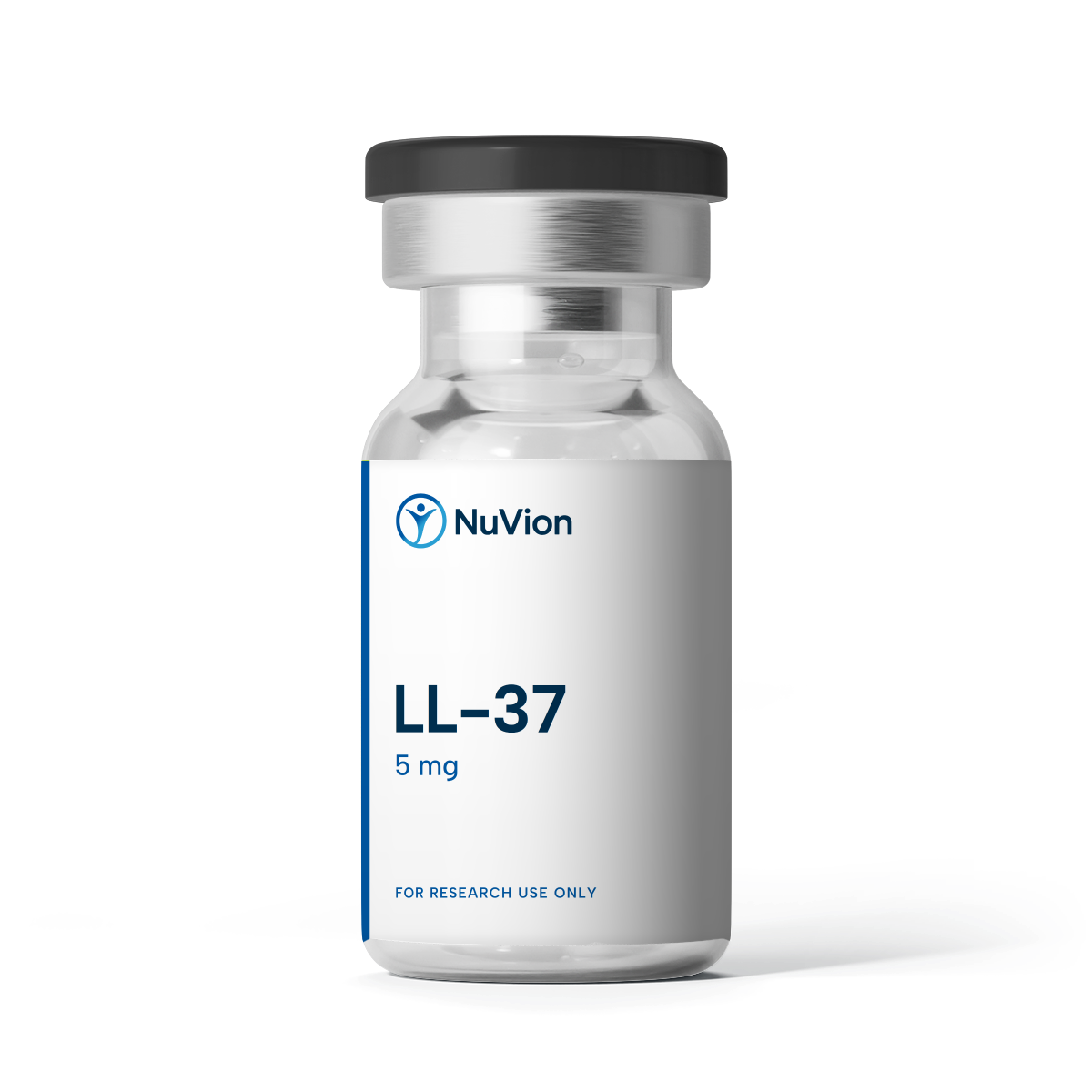

LL-37 is the human cathelicidin-derived 37 amino acid antimicrobial peptide. It is used in bacterial culture and keratinocyte models to study membrane permeabilisation, chemotaxis and innate immune defence, and NuVion stocks it in Australia as a 5mg lyophilised vial.
- Human cathelicidin-derived 37 amino acid antimicrobial peptide
- Used in bacterial culture and keratinocyte models
- Applied in membrane permeabilisation and chemotaxis assays
- Supplied lyophilised, purity by RP-HPLC and identity by mass spectrometry
LL-37 structure and research use
LL-37 is the only cathelicidin found in humans. It is cut from the C-terminal end of the precursor protein hCAP18, which is encoded by the CAMP gene, and takes its name from its 37 amino acids and the two leucines it starts with. In solution it folds into an amphipathic alpha helix. In the laboratory it is used in bacterial culture and keratinocyte models for work on membrane permeabilisation and chemotaxis.
LL-37 research applications
- Broth microdilution for minimum inhibitory concentration against reference bacterial strains, with low-salt and high-salt media in parallel
- SYTOX Green or propidium iodide uptake and calcein leakage from phosphatidylglycerol liposomes as membrane permeabilisation readouts
- Circular dichroism in SDS micelles or trifluoroethanol to follow folding of the amphipathic helix
- FPR2 signalling in HEK293-FPR2 or differentiated HL-60 cells using calcium flux, transwell chemotaxis and antagonist controls
LL-37 key facts
| Type | Synthetic peptide, human cathelicidin fragment, cationic antimicrobial peptide |
|---|---|
| Amino acid count | 37 |
| Sequence | LLGDFFRKSKEKIGKEFKRIVQRIKDFLRNLVPRTES |
| Also known as | Cathelicidin LL-37, hCAP18 C-terminal peptide, CAMP antimicrobial peptide |
| Vial size | 5mg, lyophilised |
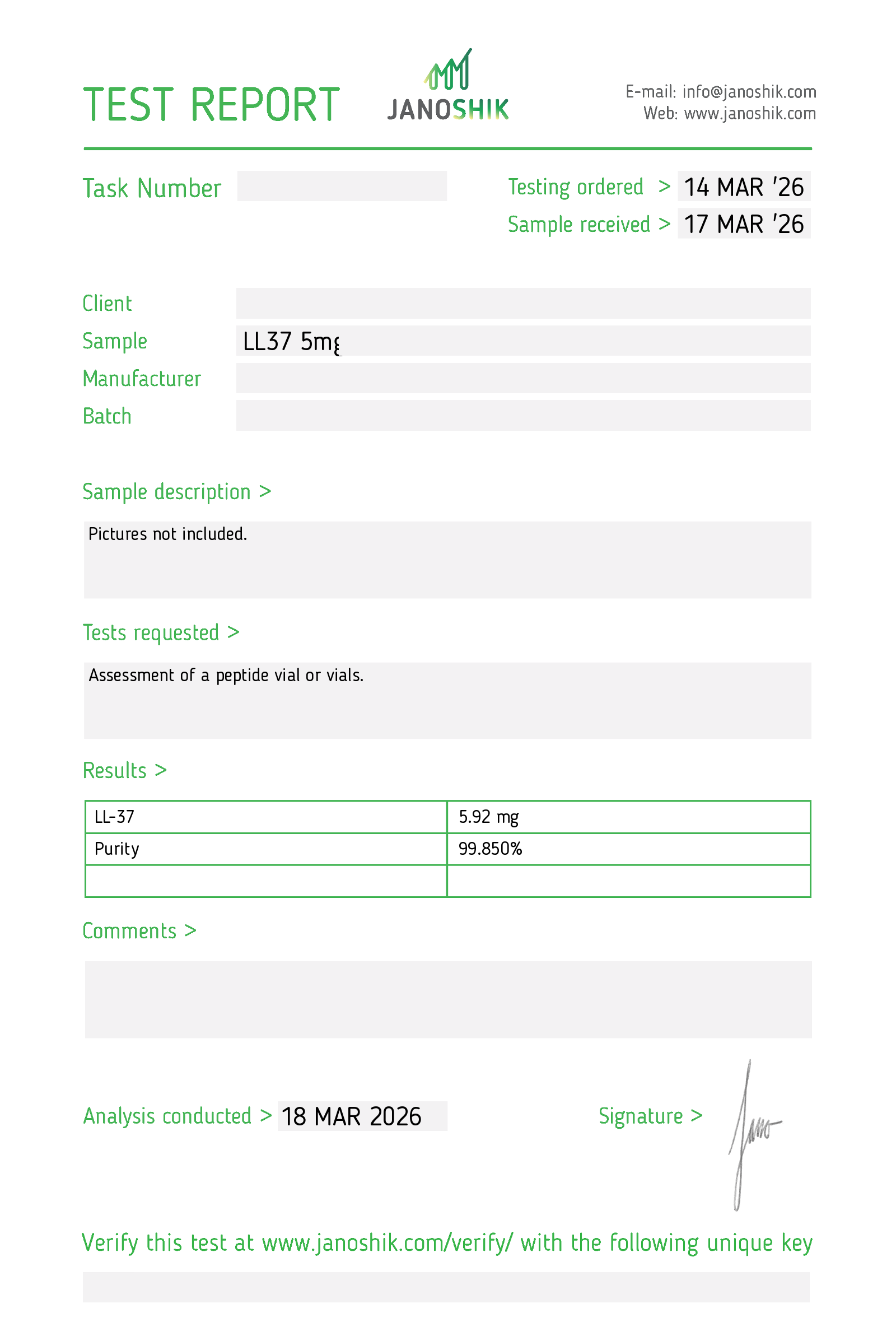
| Purity | 99.85% by RP-HPLC, Janoshik Analytical |
| Analysed | 18 March 2026 |
Research profile: LL-37: structure, mechanism and research use
Independent test: a sample of this product was analysed by Janoshik Analytical on 18 March 2026, purity 99.85% by RP-HPLC. The certificate is shown in the lab band on this page.