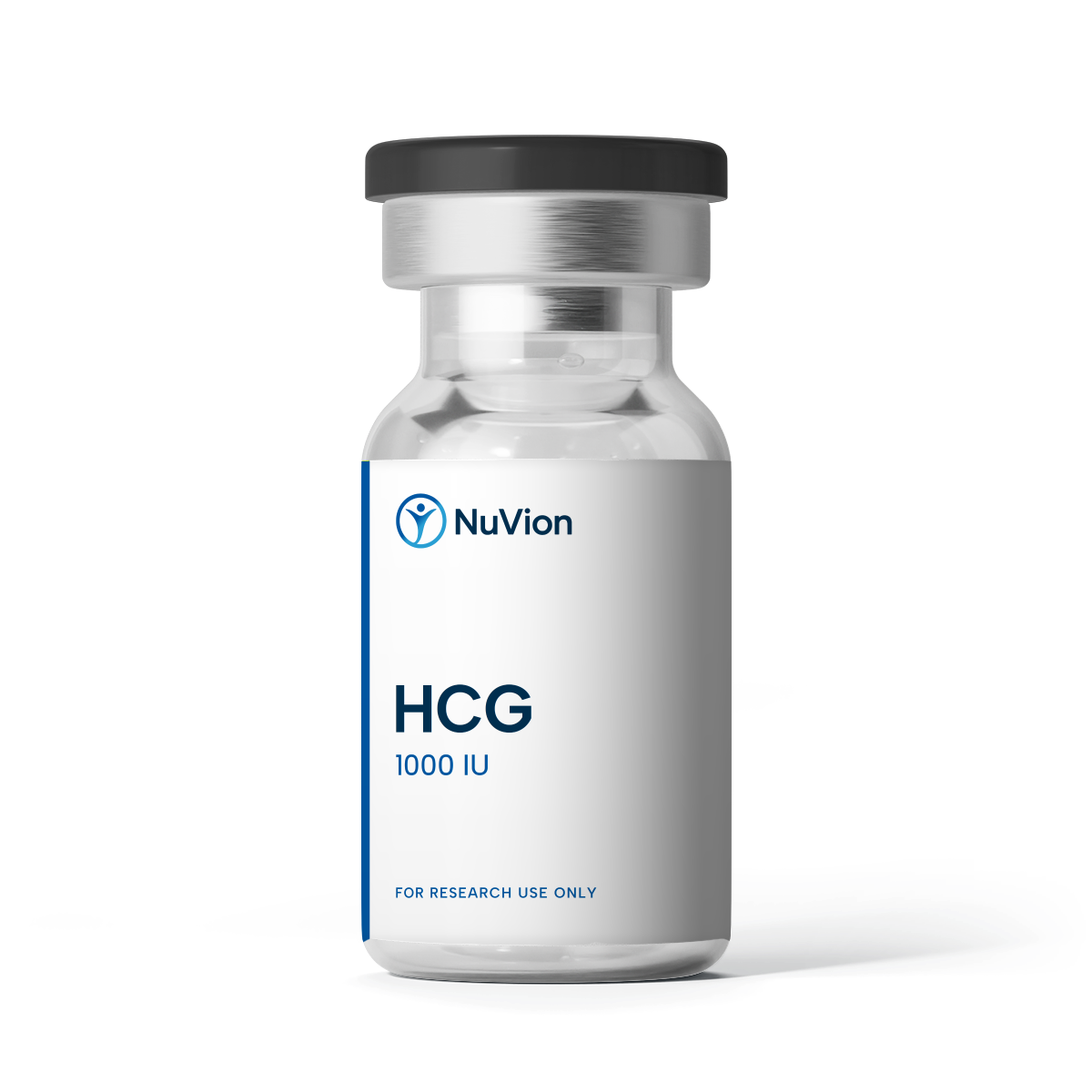

HCG, human chorionic gonadotropin, is a heterodimeric glycoprotein hormone and the reference ligand at the LH/CG receptor. It is used in Leydig and granulosa cell culture to study cAMP accumulation and steroidogenesis, and NuVion stocks it in Australia in 1,000 IU and 5,000 IU vials.
- Heterodimeric glycoprotein hormone, ligand at the LH/CG receptor (LHCGR)
- Alpha and beta subunits totalling 237 amino acids
- Used in Leydig and granulosa cell culture models
- Applied in cAMP accumulation and steroidogenesis assays
HCG structure and research use
HCG is built from two subunits. The alpha subunit is shared with LH, FSH and TSH, and the beta subunit gives HCG its receptor specificity. It binds the LH/CG receptor, a G protein-coupled receptor that signals through cyclic AMP. Because it is a glycoprotein, far larger than a short synthetic peptide, its quantity is expressed in International Units.
HCG research applications
- Cyclic AMP accumulation by HTRF or AlphaScreen in LHCGR-expressing cell lines, as the Gs reference agonist
- Steroid output in conditioned medium from Leydig or granulosa cell culture, quantified by ELISA or LC-MS
- Glycoform characterisation of the heterodimer by isoelectric focusing, lectin blot and intact mass analysis
- Subunit dissociation followed by native gel or size exclusion chromatography under varied pH conditions
HCG key facts
| Type | Heterodimeric glycoprotein hormone |
|---|---|
| Subunits | Alpha (92 residues) and beta (145 residues) |
| Total amino acid count | 237 |
| Molecular weight | Approximately 36 kDa including glycans |
| Carbohydrate content | Around 30 per cent by mass |
| Receptor | LHCGR, a class A G protein-coupled receptor |
| CAS number | 9002-61-3 |
Research profile: HCG: structure, mechanism and research use
Independent test: a 1,000 IU vial of this product was analysed by Janoshik Analytical on 23 September 2026 and measured 964 IU, test number 234334. HCG is a glycoprotein hormone, so its strength is reported in International Units rather than as a peptide purity percentage. The full report opens from the lab band on this page.